

How Globalized Sports Corruption Actually Works…
Exclusive interviews with match-fixers to show how corruption linked to the international gambling market presents an existential crisis to US sports.

To begin with the obvious and necessary: people lie.
They lie for all kinds of reasons. Sometimes they lie for profit, sometimes they lie because they like lying, and sometimes they lie because they are on the wrong side of an interrogation table facing tough, FBI agents so they start spinning and naming innocent people - anything to get themselves out of the web of law enforcement and possibly years in jail.
The federal indictments released, last week, by the US Department of Justice (DoJ) and the Federal Bureau of Investigations (FBI) from the Eastern District of Philadelphia on the widespread sports gambling and match-fixing scandal in the National College Athletics Association (NCAA) and Chinese Basketball Association (CBA) could contain some false statements. Some of the people charged in the indictment may be found innocent.
But even if a small part of the federal indictment is true US sports has a huge, existential problem. There have already been plea bargins from various players that show just one small group of gamblers corrupted dozens of NCAA Tier-1 basketball players, games and universities in a multi-billion-dollar industry.
There are more illegal gamblers and fixers - many more. They are working around the world corrupting all kinds of sports. This is an analysis of how the fixers operate. It is based on the the current DoJ indictment and an academic paper - How Gambling Corruptors Fix Football Matches - that was based on interviews that I did with international match-fixers. In this article, you will read, in their own voices, players, mobsters and match-fixers from Belgium, Brazil, Bulgaria, England, France, Italy, Malaysia, Mexico, Singapore, and America.
This article is an essential guide to how globalized sports corruption actually works. It should be read by every sports official, law enforcement agent or passionate fan to see how the fixers operate so you can, finally, start stopping them from destroying the sports world. For make no mistake, this is where we are going - the destruction of modern-day sports because of their links with globalized gambling.
Stage 1: Access - Hooking Up for Crime
The first challenge for a fixer is how to get access to the athletes or referees. The inventor of globalized match-fixing is an almost unknown genius called Frankie “Uncle” Chung (aka Uncle Jimmie, Raymond, Liew, etc.) He was a corruptor of Malaysian horse racing. In 1991, he decided to branch off into other sports, so he got on a plane and flew to Melbourne, Australia to approach players and coaches at the FIFA Under-17 World Cup.
He repeated his methods at almost every single one of the great international soccer tournaments of the 1990s - including the 1994 and 1998 FIFA World Cup and 1996 Olympic Soccer games. He is a legend in the Asian match-fixer world because Uncle Frankie also taught and mentored the second generation of Asian fixers. The ones who spread his methods around the world: men like Dan Tan, Pal Kurusamy or Wilson Raj Perumal. But it was another era, Uncle Frankie, in those days, actually had to go to the hotels or practice fields of the teams to meet potentially corrupt athletes.
Now, social media allows a potential corruptor to travel without ever getting on a plane. Would-be fixers can just reach out over Facebook. We live, after all, in the age of emotional intimacy founded through social media. People use it to find hook-ups, dates and marriage partners. Why not criminal partners?
According to the DoJ Indictment, this was also the method of the NCAA fixers. After working successfully to corrupt Chinese Basketball, they turned their attention to the NCAA. They had a problem - how to recruit players to join their scheme? Their solution - use former players to approach the players over social media.
After profiting on the fixed CBA games… Defendants JALEN SMITH, MARVES FAIRLEY, RODERICK WINKLER, and ALBERTO LAUREANO, and Antonio Blakeney, then approached and communicated with NCAA basketball players, in person and through social media, text message communications, and cellular telephone calls.
The access to the players was aided because they were not using an eccentric, but charming outsider like Uncle Frankie. Rather they used a a very experienced ex-NBA player - Antonio Blakeney - to make the approaches.
I wrote another paper - Jumping Into Fixing - that examines the demographics of sports corruption. The usual myth promoted by sports officials is that match-fixing is the prevail of younger players - who lost in the anomie of a fast lifestyle, faster women and mass adulation lose their souls to corruption. The truth is the exact opposite. Match-fixing is, usually, led by older players who bring in the younger players. It was the same in this NCAA case. Antonio Blakeney is alleged by the federal prosecutors to have built up a network of corrupted relatively senior players who, in turn, brought in other players.
…defendants FAIRLEY and HENNEN, and Blakeney, enlisted additional participants to help them operate this aspect of the scheme and to recruit NCAA players who would accept bribes to influence games… [they] had credibility with many of the players and could approach them to engage in this scheme because of their prominence, experience, and reputation in local and national basketball communities…
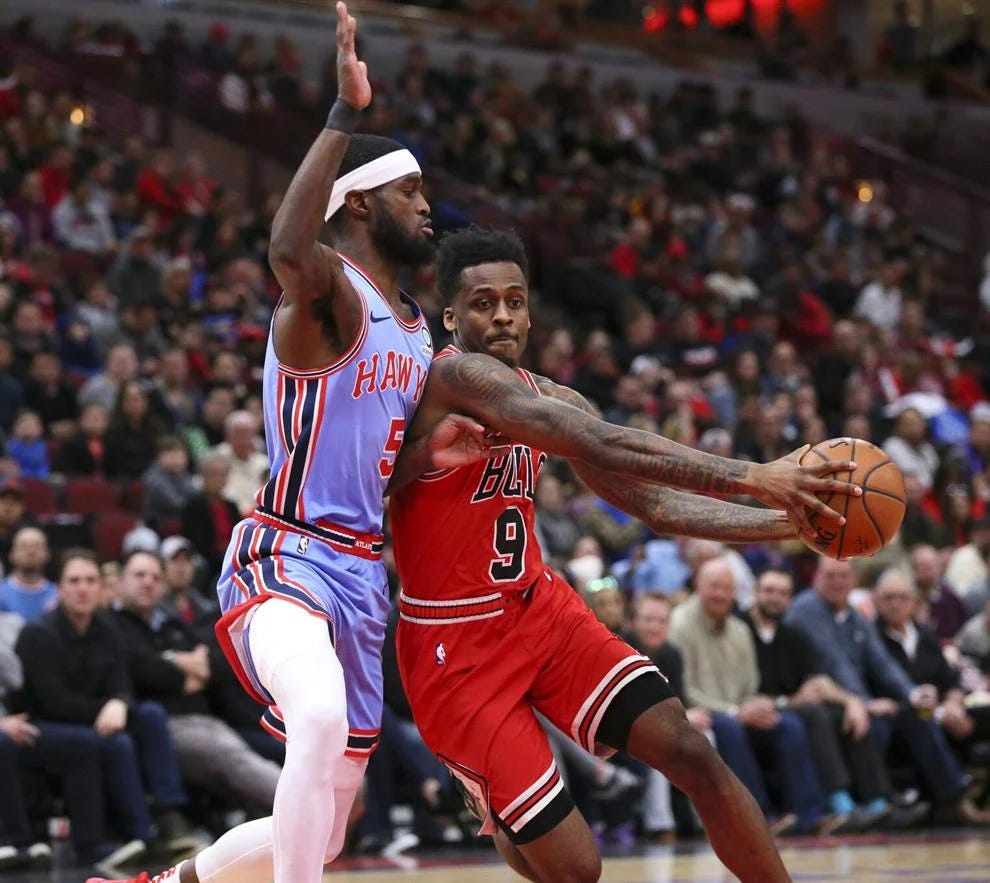
Antonio Blakeney during his NBA career.
Stage 2: Recruitment: The X Factor
The alleged NCAA match-fixers did not seem to have any problem recruiting players. In the federal indictment, there is only one specific player reported to have turned them down. No player seems to have alerted the NCAA or any other authority that they got approached. This analysis may change. We may find something else out in the court trial but part of this seeming-success may have been because of their careful selection of targets.
The fixers targeted for their scheme NCAA basketball players for whom the bribe payments would meaningfully supplement or exceed legitimate NIL opportunities.
Hill’s 2nd Law of Sports Corruption
Bribe = Salary + X
All things being equal, athletes hate fixing games. They are inherently competitive people: the kind of pain-in-the-ass who must win everything. To corrupt them a fixer has to overturn the usual circumstances. They have to pay them more money (X) or give them a gift (Pal, the Singaporean fixer boasted about providing prostitutes for his most successful fixes) than they would get for playing the game normally. The lower the normal salary of the player, the lower the bribe has to be.
(By the way, my 1st Law of Sports Corruption: the likelihood of a sports event being corrupted = The total amount of money bet on the event/the median salary of the players/referees. I wrote about it with colleagues in this academic paper - "Red-flagging the leagues: the U.S. Sports most in danger from match-fixing".
The fixers targeted for their scheme NCAA basketball players for whom the bribe payments would meaningfully supplement or exceed legitimate NIL opportunities….The fixers offered the players bribe payments, usually ranging from $10,000 to $30,000 per game, to participate in the scheme.
Note - Nowhere in the indictment or during the FBI press conference was there any suggestion of any mafia influence or involvement. There is no hint of coercion. No threatening of players at this recruitment stage. It is exactly like the corrupt approach reported by senior Belgian soccer player in one of the match-fixing scandals in that country.
“Two days before the match, I received a telephone call from an old acquaintance. He asked me if I would accept to not play the game to my fullest... I refused immediately. I did not want to fall that low. But it was clear. The person and his commander respected my decision. I had known them for a long time and I was never threatened, contrary to what people would have you believe…”
Show them the Cash
This does not mean that when organized crime fixers corrupt sports events they never threaten or beat up their players. It just means that mobsters do not do so when they are first recruiting players. However, to repeat, there is no hint in the DoJ documents that these alleged fixers are in any way connected to organized crime.
Part of their success may be explained in this quote from an interview I did with, ironically, a former Capo of the Colombo Crime Family - Michael Franzese - who claims to have fixed numerous sports events, including NCAA basketball games. He talks openly about his recruitment methods when me met players.
“Listen you’re a smart guy. I’m your good friend. Let me tell you how you’re going to make some money. Ten grand in my pocket. Pull it out. Put it on the table in front of them. More money than they have ever seen in cash in their life.”
This is the exactly the same method that the alleged fixers used in this NCAA case.
Defendant SMITH expressed interest in recruiting players on those teams to join the scheme, and in connection with one of those players, defendant SMITH sent to defendant EZEWIRO a photograph of stacks of cash acknowledging the large amount of money NCAA players could make by point shaving, with the message, “send that to him if he bite he bite if he don’t so be it lol.”
Stage 3: Fixing the Gambling Market
There are two essential processes in match-fixing: fixing the game by corrupting players/referees/officials to underperform and fixing the gambling market, so no other bettors or bookmakers can figure out what is going on.
Most match-fixers spend far more time figuring out how to fix the market than the game. It was the same in this case. Here is how they did it.
Bet the UnderDogs
The fixers also generally targeted for their scheme players on teams that were underdogs in games and sought to have them fail to cover the spreads in those games.
You could write an entire book on just that one sentence.
I once spent almost an evening trying to convince a famous academic that fixers do not spend much time getting favourites to lose. I won’t share his name. It was a good-faith conversation over many beers. But he was obsessed, as most Americans are, with the rare example of the 1919 Chicago White Sox baseball team - where the favourites, Shoeless Joe Jackson included, lost the World Series to the underdogs. It makes for great romantic stories but the way most match-fixers work is to corrupt the team/athlete who is expected to lose.
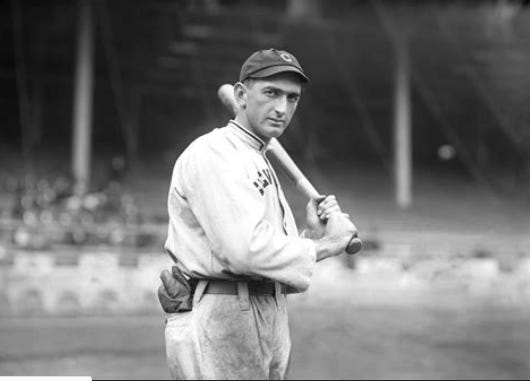
Shoeless Joe Jackson, who was embroiled in the greatest match-fixing scandal of US history.
Fixing the underdog also makes it easier to bribe the players. “You are going to lose, why not lose with 30,000 Francs in your pocket,” were Bernard Tapie’s words, when bribing French soccer players to get his Olympique de Marseille team to win the league.
As importantly, the sports gambling market rarely notices any suspicious odds movements. After all, the result is what the market expects to happen: the weaker team loses.
You may argue, as the famous academic did, that would effect their profits. A fixer will not make as much money fixing the weaker team. That is true but a smart match-fixer is searching for two things: long-term profit and certainty.
In an interview with a current-day Asian match-fixer about his gangs’ methods, he told me, “Look, we just keep it simple. No one gets greedy. Keep our profits at 20%, everyone wins and no one notices the fixing.”
Don’t think that sounds reasonable? Well, how many times do you make an investment that returns 20% profit in one-hour? How many times can you keep repeating that investment? This is what the fixers are aiming to do: long-term, low-pressure, successful fixing.
There is another factor in their calculations: certainty. It is the focus of most gamblers. It was the obsession of a group of Brazilian match-fixers who bribed some of their Premier League soccer referees. One covertly-intercepted phone call between one of the fixers and his referee just before a big match, gives a sense of desperation of the gamblers:
Fayad: So, how much certainty can you give me today?
de Carvalho: Maximum, of course.
Fayad: What is the certainty? Can you give me that guarantee? For the love of God, my life is on the line!
Use Beards
To conceal their scheme from authorities and increase their ability to make bets, the fixers also used “straw” or “proxy” bettors to place bets on the fixed games for them with funds provided by the fixers.
The alleged NCAA fixers are not alone in this method. Billy Walters, one of the world’s greatest professional sports gamblers, wrote an entire book on his methods. Throughout the book, he writes that he must hide his bets from bookmakers. Back in the 1700s, the sharps (smart bettors) would use agents who would wear false beards to place their bets. The FBI refers to them as “straw bettors”. There is an industry of companies and runners who work for professional gamblers or fixers to get their bets down without the bookmakers being aware of them.
One Balkan fixer that I spoke to got his start in match-fixing by signing up students to sell him their bank identity so that he could use their names as dummy accounts with bookmakers. He had thousands of these accounts.
Just Fix Part of the Game
They communicated with the NCAA basketball players who had agreed to participate in the point-shaving scheme and directed them to underperform or otherwise help influence the outcome of particular games or a specific portion (generally the first half) of particular games.
Geddit?
The fixers are not going to corrupt the whole game or even the point-spread. They are just going to get the players to underperform for one half of the game. Then they can parlay that bet into a bigger one. Team X will lose the first half but win the game or just take their profit from a losing first half. This type of bet will have a lower reward but attract far less scrutiny in the gambling market.
Stage 4: Performance - “Chilllll the F*ck Out!”
Most of the fixers’ bets on this game failed as Texas A&M-Corpus Christi did not cover the higher spreads, winning the game 72 to 61. Defendants FAIRLEY and HENNEN, and other scheme participants, communicated via text about this failure, with defendant FAIRLEY calling their financial losses, “Unbelievable.”
Often, fixes do not work.
During the game on or about March 5,2024, defendant JALEN SMITH texted Micawber Etienne to complain that one of the players who was not involved in the point-shaving scheme was playing well and needed to “chilllll [the fxck] out.” Etienne texted defendant SMITH back, during the game, and assured him that the DePaul players involved in the scheme were keeping the ball away from that player and preventing him from scoring.
The fixers were texting with the players DURING the games! This is the control that the gamblers, purportedly, had on their players. Forget the coach. Forget all those fancy, complicated play-books beloved in the NCAA. Forget all those long, drawn-out, anguished panel discussions about player performance on ESPN and the other complicit sports media outlets who have got into a commercial bed with the bookmakers. In this game, and dozens of others, the players were following the orders of the fixers in real time.
You Grunt, I’ll Groan
Jackie “Mr. TV” Pallo was a popular British professional wrestler for three decades. He was famous as a “baddy” who delighted in tormenting the “blue eyes” (wrestlers who played heroic roles) and the audience. However, at the height of his career Pallo was excluded from a lucrative television contract. Accordingly, he wrote a tell-all autobiography entitled You Grunt, I’ll Groan where he claimed the entire sport was a fraudulent theatrical exercise.
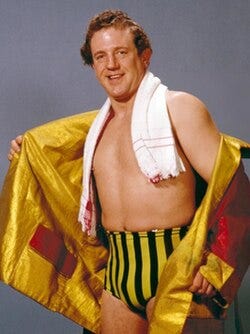
He described in detail many of the fixes in wrestling and how they are performed (My personal favourite is the chapter entitled “Six Commandments of Wrestling”). He claimed that he had participated in a large number of fixed wrestling bouts and the most important part was the need “to sell” a fix. After each wrestling move the fighters will try to convince the spectators that it is a genuine with screams of either anguish or triumph.
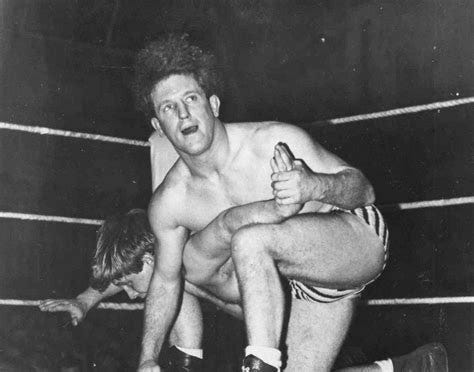
There is a similar theatrical aspect in all match-fixing. A former Serie A player said to me, “I hate fixing games. You know why? Because I am a player, not an actor.” He was expressing his dissatisfaction with the way players must act, on and off the field, as if the idea of fixing is the last thing in their minds. Another athlete, I interviewed, played in the Malaysian Soccer League. The police discovered that at least six of his fellow teammates were involved in fixing games.
He talked about how they used to “sell” the fixes.
It is all the verbal bullshit before a game; they shout lots of stuff, “Come on, come on,” then during the game it is just little tiny things like just mistiming a sliding tackle or letting a guy go through. These guys became experts in making it look like they were out there giving blood to their team. Coming in after the games and throwing themselves on the floor and screaming
Stage 5: Payment - Cash is King!
One of the great drug importers for the Sinaloa Drug Cartel spoke to my organized crime class in at the University of New Haven. There was a DEA agent present who asked him how about cyber currency. His response?
“You think I can pay for a hitman with Bitcoin or Monero or some weird shit on my phone?! If I want something done, I have to pay cash. Hard, cold cash on the table. No hitman or drug trafficker is going to do anything without cash.”
In the match-fixing world it is the same thing. Cash is king. When Dan Tan was fixing Italian soccer games, he would send one of his associates with a bag of cash - tens-of-thousands of Euro - on a 12-hour flight from Singapore to Milan. The runner would deliver it to their associates and then take the return flight home an hour later.
It is the same with this group of alleged NCAA fixers. They either delivered the cash themselves to their bribed players or had runners take the cash to an anonymous site on or near the university campus. Like Dan Tan’s runner, these trips were not for tourists. They would hand over the cash, to the ring leader of the players who would then distributes it to his teammates.
All of these payment drop offs were in anonymous areas or places where no player might be seen taking the cash. When they allegedly paid Antonio Blakeney, the ex-NBA player, they put the money - all cash - in an envelope and left it in his storage locker.
In or about April 2023, at the conclusion of the 2022-2023 CBA regular season, defendant MARVES FAIRLEY placed a package into Antonio Blakeney’s storage unit in Florida which contained nearly $200,000 in cash, representing bribe payments and proceeds from the fixed CBA games during the season.
The NCAA fixers seemed to be honest. They paid what they owed quickly - sometimes within hours after a game. In the dozens of corrupted matches, the investigators report only one time that they did not pay after a successful fix.
“Charged Elsewhere”: The End of the Credibility of Sports
There will be more investigations to come. More scandals. More games that will be revealed to have been corrupted. More high-profile athletes who were bribed.
In the federal indictment, beside a number of the alleged participants are the words, “charged elsewhere”. That means more investigations and scandals are coming down the judicial pipeline.
This should not be a surprise. Just look at the number of games that this particular syndicate tried or succeeded, allegedly, in corrupting. 39 players on more than 17 different NCAA Division I men’s basketball teams who then fixed and attempted to fix more than 29 NCAA Division I men’s basketball games.
More importantly, look at the size of the gambling market - the European Police Association, Europol - estimates it at 1.63 trillion dollars. That market bets on up to 60,000 sports events a day. With numbers like that you know that there will be more sports scandals coming. The sports world has simply refused to acknowledge that they are in too close a relationship with the gambling industry. They continue to blame the players for “not making ethical choices”.
There is one story buried deep in the Department of Justice indictment that signals the coming end of the credibility of American sport.
Around half time of this game, when it was clear that the point-shaving scheme was succeeding, defendant JALEN SMITH texted Etienne about arranging to pay the bribe money and complimented defendants TERRY and NELSON for underperforming as they had agreed: “l love Jalen terry he perfected his job . . . Sh*t Nelson snapped too.” Without the DePaul players intentionally underperforming in the second half of the game, DePaul played substantially better, outscoring Georgetown 48 to 36. Georgetown won the game 77 to 76, as defendant TERRY scored zero points in the first half of this game and l6 points in the second
If you watched that game: Georgetown versus DePaul, and you did not know that there was a fix going on, you might have thought that you were witnessing sport at is uncertain best. DePaul, down on its luck, its players lost and forlorn in the first half, eleven points behind a powerful Georgetown team - thanks to an impressive, dramatic half-time talk by the coach - come roaring back in the second half. They were within one point of winning the game! Wow. This is sports at its best.
Except that it wasn’t. It was all a play. Arigged match where complicit DePaul players underperformed to the instructions of fixers.
I challenge anyone reading this article, next time you watch a sports event. Next time, you watch some miraculous action: a superb catch, a dropped opportunity, a last-minute over-turning of the odds from seemingly nowhere - tell me that you are not going to have some doubt. You’re not going to be thinking, “Was that real? Am I really watching sport or is it all pre-arranged, corrupt theatre?”